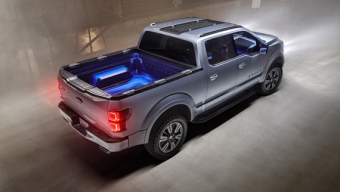
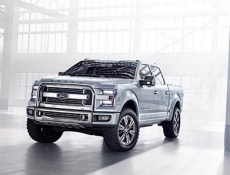
DETROIT - Ford unveiled
the Ford Atlas Concept to showcase the design, capability, fuel
efficiency and smart technologies that will define future pickup trucks.
"The Ford Atlas Concept
previews the innovations that will transform what people expect from
their pickup," said Raj Nair, Ford group vice president, Global Product
Development. "With 36 years as America's best-selling pickup, we are
absolutely committed to setting the agenda in the truck market."
Design with purpose The
Ford Atlas Concept is inspired by decades of listening to customers at
the places they work and play. The result is a purpose-driven design
with prominent wheel arches, a wide stance and chiseled grille – all to
reinforce its functional Built Ford Tough® image.
"We wanted the concept to reflect how Ford
trucks help customers in both their worlds – professionally and
personally," said J Mays, Ford group vice president and chief creative
officer. "Every surface and feature in the vehicle has been crafted for
purpose and capability while retaining an unmistakable Built Ford Tough
look."
Designers enhanced truck functionality,
while creating new advanced features (see infographic here). For
example, multiple tie-down points are integrated within the cargo box
walls and load floor, along with 110-volt electrical outlets in the
cargo box to charge power tools. An integrated roof carrying system and
hidden extendable ramps give the truck unique functionality for a
variety of jobs.
The interior is themed with structural
styling cues and features the latest thinking in comfort, utility and
refinement. Innovative, thin, lightweight seating in comfortable leather
allows for extra legroom for rear passengers – along with integrated
storage for smaller items. "Floating" instrument pods and glove-friendly
buttons and controls keep the interior functional and ruggedly stylish.
Leading fuel efficiency The Ford Atlas
Concept features a next-generation EcoBoost® powertrain, which
introduces truck-enhanced Auto Start-Stop engine shutoff technology.
Auto Start-Stop shuts off the engine when stopped in traffic to save
fuel – and smartly suspends the feature when the truck knows it is
towing.
EcoBoost engines use gasoline direct
injection and turbocharging to deliver fuel-economy gains of up to 20
percent and reduction of CO2 emissions of up to 15 percent, compared
with larger-displacement engines. More than 500,000 EcoBoost engines
have been sold globally, including 250,000 in the Ford F-150.