|
|
 |
 |
||||||||
|
Automotive Intelligence - the web for automotive professionals and car enthusiasts |
|||||||||
|
November 09, 2012 This Week:
© 1998 - 2012
Copyright & |
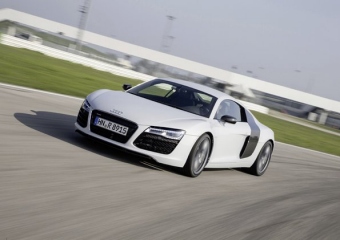
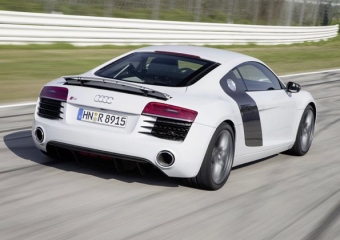
Besides the six-speed manual, the new seven-speed S tronic, which replaces the R tronic used previously, is also available. It is standard in all V10 models. The fast-shifting dual-clutch transmission features a launch control function that provides optimal traction when starting. Power is delivered to the road via the quattro permanent all-wheel drive system with a rear-axle bias. All versions of the R8 feature an axle load distribution of roughly 43:57 – ideal for a mid-engine sports car. Dry sump lubrication enables the engines to be mounted low, giving the vehicle a very low center of gravity. All of the wheels are mounted on aluminum double wishbones. The setup is tuned for high dynamics, yet delivers good comfort. The adaptive damping system Audi magnetic ride (standard in the R8 V10) adapts the response of the shock absorbers to the requirements of the driver and the road. The chassis of the Audi R8 V10 is decidedly tuned for dynamics. A special configuration including modified spring/damper tuning with a corresponding adjustment of the camber values at the front axle provides for even more dynamic handling. The alloy wheels, which measure 18 or 19 inches in diameter depending on the engine, come in a variety of new designs. The brakes are incredibly powerful. All four discs are internally vented and perforated, and their wave design reduces the weight. Audi also offers optional carbon fiber-ceramic discs that are even lighter, yet extremely durable and long-lasting. These are standard with the R8 V10 plus. ultra lightweight construction: base vehicle weight of 1,560 kilograms (3,439.21 lb) Audi is demonstrating its expertise in ultra lightweight construction technology with the updated R8. The R8 V8 with the six-speed manual gearbox (without a driver) tips the scales at just 1,560 kilograms (3,439.21 lb); the R8 V10 plus with the manual transmission weighs 1,570 kilograms (3,461.26). The Audi engineers have reduced the weight of the top model by roughly 50 kilograms (110.23 lb). The most important component in the ultra lightweight construction concept of the Audi R8 is the body. An aluminum Audi Space Frame, it weighs just 210 kilograms (462.97 lb), roughly 40 percent less than a comparable steel structure. The body of the R8 Spyder with its electrohydraulically actuated cloth top weighs 216 kilograms (476.20 lb). The ASF body lays the foundation for the dynamic, precise and safe handling and high passive safety. The exterior design has been honed ever further. The restructured all-LED headlights and rear lights are standard with all models. The Singleframe grille with tapered corners at the top, the redesigned diffuser and the large, round tailpipes are the most eye-catching new features. The diffuser of the R8 V10 plus features a different geometry and is made of carbon fiber-reinforced polymer. The rear lights of all models include dynamic turn signals, a worldwide first from Audi. Produced by LEDs, the turn signal runs from the inside out in the direction in which the driver wants to turn. Many bolt-on body parts of the R8 Spyder and R8 V10 plus are made of carbon fiber-reinforced polymer (CFRP). The same material is also used in the interior of the top model. The driver and passenger sit in bucket seats with folding backrests. The interior of all versions of the high-performance sports car is now even more refined. With the honeycomb-quilted Fine Nappa full-leather package, the seat covers and inserts in the door liners are quilted. This quilting is also available as an option for the Alcantara headlining. The updated Audi R8, which is built in a quattro GmbH factory in Neckarsulm, is scheduled to launch in Europe toward the end of the year. The base price in Germany is €113,500. Photos: Audi (2012-10-22)
|
||||||||