DETROIT – On June 30,
1953, the first of a new kind of Chevrolet – indeed, a new kind of
American car – rolled off an assembly line in Flint, Mich.
The car had only two
seats. There were no roll-up windows, or exterior door handles, for that
matter. Its body wasn’t stamped from steel but, rather, molded from
reinforced fiberglass.
While the postwar Baby
Boom was in full swing, this was definitely not a family car. This was a
very personal vehicle, one that promised a driver and a passenger all of
the thrills of the open road.
Skeptics gave the car
little chance of lasting beyond an initial run of a few dozen units.
However, 60 years later the Chevrolet Corvette survives – and thrives –
as an American automotive and cultural icon.
Chevrolet Corvette, 1957
“Through the years,
Corvette certainly offered state-of-the-art features, designs,
technologies and performance,” said Tadge Juechter, vehicle chief
engineer for Corvette. “However, I think what has made the Corvette such
an enduring concept is the exciting experience of driving one.
“No matter what your station in
life, when you’re behind the wheel of a Corvette, you’re an
Olympic athlete – able to go faster, stop quicker, and turn
better than everyone else,” Juechter continued. “Very few cars
can match that experience. And no other car has delivered that
experience as well, or to more people, than the Corvette.”
Barely five months before Tony Kleiber, a
Flint plant body assembler, drove that first Chevrolet Corvette off the
line and into automotive history, the icon in the making was little more
than a designer’s dream.
Corvette was first created under the
code-name XP-122 to provide Americans with a glimpse of a European-style
sports car designed for this side of the Atlantic. It was one of several
concept cars unveiled in January, 1953 at the GM Motorama show in the
ballroom of the Waldorf Astoria Hotel in New York City.
With a world war not far behind them,
people wanting a glimpse of the automotive future lined up around the
block to view the new concept vehicles. At the Waldorf Astoria – and at
every other Motorama stop across the country -- Chevrolet’s sporty
little roadster ignited many Americans’ imaginations.
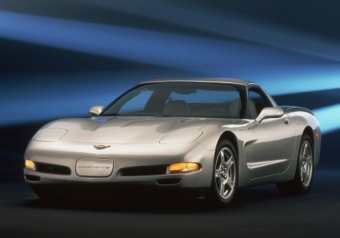
Chevrolet Corvette, 1997
In fact, the Corvette was so popular that
Chevrolet executives decided to thrust the two-seat roadster into
production, albeit on a very limited basis.
Initial plans called for about 150
Corvettes, primarily to help draw potential customers into Chevrolet
dealerships scattered across the U.S.’s then-48 states. Overwhelming
demand doubled the first-year production to 300 units. The following
year, the Corvette moved to a GM assembly facility in St. Louis, Mo.,
where 3,640 Corvettes were built for the 1954 model year.
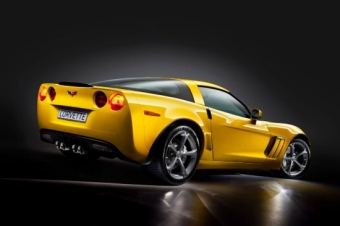
Chevrolet Corvette Grand Sport, 2011
Those first Corvettes sparked Americans’
60-year love affair with the Corvette. Since 1953, more than 1.5 million
Corvettes have been built. Those cars have become synonymous with
American performance – from cruising down Americana on Route 66 to
taking the checkered flag at the world’s most prestigious road race, the
24 Hours of Le Mans.
During the coming months, Chevrolet will
kick some tires, open the hood, and climb behind the wheel to highlight
60 years of Corvette design, performance and technology milestones. We
hope you enjoy the ride.