

Automotive Intelligence - the web for automotive professionals and car enthusiasts
January 15, 2008
This Week:
-
Lexus LF-A Takes on Roadster Form - An Open Version of the Supercar Concept Revealed
-
Mercedes-Benz at the 2008 NAIAS in Detroit: Mercedes brings Hollywood to COBO Hall
-
Chrysler's Fuel-efficient HEMI(R) Hybrid to Power All-New Dodge Ram
© 1998 - 2008
Copyright &
Disclaimer
Automotive Intelligence,
www.autointell.com
All Rights Reserved .
For questions please contact
editor@autointell.net
|
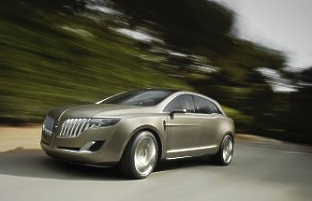
Lincoln Unveils Ultimate Touring Vehicle Concept
DETROIT - Lincoln today pulls the wraps off a new premium utility concept vehicle -- unsurpassed in its balance of spaciousness, comfort and fuel efficiency -- that shows customers a new way to tour in style. |
|
|
|
The Lincoln MKT concept features a 3.5-liter V-6 EcoBoost engine with turbocharging and direct injection that produces the power and torque of a V-8 engine with the fuel efficiency of a V-6. EcoBoost -- combined with advanced transmissions, electric power steering, weight reductions and aerodynamic improvements -- is a key part of Ford Motor Company's vehicle sustainability strategy. |

The company is introducing EcoBoost engines that will deliver up to 20 percent better fuel economy on half a million Ford, Lincoln and Mercury vehicles annually in North America within the next five years. Ford will first introduce EcoBoost in the Lincoln MKS next year. The luxury sedan will feature a 3.5-liter twin-turbocharged V-6, delivering an estimated 340- horsepower and more than 340 lb.-ft. of torque on regular gas.
"EcoBoost engines can deliver better fuel economy and performance on a full range of vehicles, from small cars to large trucks," said Mark Fields, president of The Americas. "The Lincoln MKT concept offers the comfort of a luxury sedan, the spaciousness and flexibility of a full-size utility and the performance of a sporty roadster -- executed with new technologies and materials that make it as environmentally friendly as it is elegant.
"The Lincoln MKT concept is understated but powerful -- inside, outside and under the hood."
Premium Efficiency
The Lincoln MKT concept features an EcoBoost engine that's flex-fuel capable, providing the driver with the flexibility to switch back and forth between premium gasoline and E85 ethanol-gas blend. Burning these high-octane fuels, the MKT concept's V-6 engine delivers 415 horsepower and 400 pound-feet of torque -- an impressive 118 horsepower per liter.
The concept's engine is mated to a six-speed transmission for greater fuel efficiency. Fuel efficiency also is helped by weight-saving, eco-friendly "upcycled" materials from SABIC Innovative Plastics.
Two upcycled plastic materials, Valox iQ and Xenoy iQ, were used in making the Lincoln MKT body panels, energy absorbers, wire bundles and glazing. The resins are made from discarded soft-drink bottles and other polyester waste, keeping them out of landfills, reducing energy consumption and shrinking the vehicle's overall carbon footprint.
Some applications of the resin help the vehicle resist heat and chemicals and also improve overall noise and vibration.
Photos: Ford
(Jan. 14, 2008)
| .
Homepage News Companies Management Publications Events Guestbook Search . |