|
|
 |
 |
||||||
|
January 18, 2007 This Week:
© 1998 - 2007
Copyright & |
The new 1 Series comes with Automatic Start-Stop function to cut fuel consumption. Standard on all manual transmission models (except 130i), the system automatically switches the engine off when the vehicle is stationary and the driver puts the car into neutral. To restart the driver only need engage the clutch again before pulling away in the normal manner. Should he not want to use the Automatic Start-Stop function it can be manually switched off. The use of Electric Power Steering results in a 90 per cent energy saving compared to a conventional mechanical hydraulic steering system. Power assistance is now provided by an electric motor that works only when required, such as turning a corner. Other fuel saving enhancements have been made courtesy of various ancillary devices, such as the air-conditioning power supply being disconnected from the drivetrain when not in use. Even flaps behind the kidney grille improve economy, closing up for improved aerodynamic efficiency should the engine require less airflow. The feature also improves cold starting times. Engine changes and statistics in detail
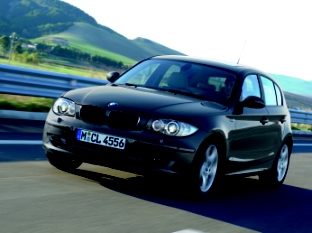
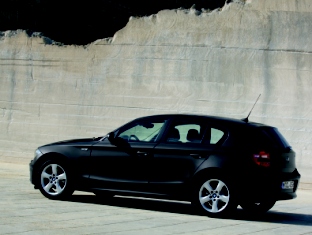
130i: World’s lightest six-cylinder production engine with VALVETRONIC and Bi-VANOS technology achieves zero to 62mph in 6.0 seconds (five-door is 6.1 seconds) and an electronically limited top speed of 155mph. Output is 265bhp while peak torque is 315Nm. Combined fuel consumption is 34.0mpg and CO2 emissions are 197g/km. 120i: New four-cylinder engine with High-Precision Direct Injection and Bi-VANOS technology achieves zero to 62mph in 7.7 seconds (7.8 seconds for five-door) before going on to a top speed of 139mph. Output is 170hp (up 20hp) while peak torque is now 210Nm (up 10Nm). Combined fuel consumption is 44.1mpg (improves by 17 per cent), CO2 emissions are 152g/km (down 16 per cent). 118i: New four-cylinder engine with High-Precision Direct Injection and Bi-VANOS technology achieves zero to 62mpg in 8.7 seconds (8.8 seconds for five-door) before going on to a top speed of 130mph. Output is 143hp (up 14hp) while peak torque is now 190Nm (up 10Nm). Combined fuel consumption is 47.9mpg (improves by 24 per cent), CO2 emissions are 140g/km (down 20.5 per cent). 116i (five-door only): Four-cylinder engine with Bi-VANOS achieves zero to 62mph in 10.9 seconds and a top speed of 124mph. Output is 116hp and peak torque is 150Nm. Combined fuel consumption is 37.7mpg and CO2 emissions are 179g/km. 120d: Second generation common-rail diesel engine with aluminium crankcase achieves zero to 62mph in 7.5 seconds (7.6 seconds for five-door) before going on to a top speed of 142mph. Output is 177hp (up 14hp) while peak torque is 350Nm (up 10Nm). Combined fuel consumption is 57.6mpg (improves by 16 per cent) and CO2 emissions are 129g/km (down 15.1 per cent). 118d: Second generation common-rail diesel engine with aluminium crankcase achieves zero to 62mph in 8.9 seconds (9.0 seconds for five door) before going on to a top speed of 130mph. Output is 143hp (up 21 hp) while peak torque is 300Nm (up 20Nm). Combined fuel consumption is 60.1mpg (improves by 19 per cent) and CO2 emissions are 123g/km (down 18 per cent). Traction and safety All BMW 1 Series models come with Dynamic Stability Control with Dynamic Traction Control for the best combination driving pleasure and safety. DSC allows drivers to make the most of the 1 Series’ 50:50 weight distribution and rear-wheel-drive configuration for the best on-road performance. The BMW 130i comes with five additional functions with its DSC+ system for enhanced convenience and driver safety: Hill Start Assistant, Brake Pre-tensioning, Brake Drying, Brake Fade Compensation and Soft Stop. All BMW 1 Series have six airbags as standard, the Brake Force Display function on the rear lights to highlight sharp braking and Run-flat tyres with Tyre Puncture Warning System. A new style of BMW 1 Series To herald the introduction of the latest generation of engines, BMW’s designers have refreshed the interior and exterior styling of the five-door model. The 1 Series now features a larger kidney grille for improved airflow to the engine. The lower front spoiler has also been reprofiled to create a larger air intake, while the spoiler protrudes further for a more pronounced, sporting look. The headlamp cluster remains the same size but a darker cover gives a subtle, more distinguished front end. At the rear a restyled bumper gives the impression of a wider, lower car. The rear lamp cluster now features a new arrangement of lights, but retains its original shape. The new three-door 1 Series features the same styling cues but its side view is naturally different. The passenger doors are longer than those on the five-door model and are also frameless in the style of a coupé. Inside, customers will also be able to choose between either a four-seat or a five-seat configuration. In the four-seat arrangement rear passengers are separated by a central storage compartment and sit in more sculptured seats. As a no-cost option the five-seat layout offers the traditional bench seat standard on the five-door 1 Series. The introduction of higher quality materials and minor changes to the layout of the interior enhance customer comfort and practicality. (Jan. 16, 2007)
|
||||||