

Automotive Intelligence - the web for automotive professionals and car enthusiasts
August 1, 2007
This Week:
-
Mitsubishi announces new generation compact SUV, the Concept-cX
-
Michael Schumacher to unveil the Ferrari 430 Scuderia at the Frankfurt Motor Show
-
Re-designed Saab 9-3 will enter North American market by early September
-
KIA to extend PRO-cee’d family with three-door model at the Frankfurt Auto Show
-
Greenpeace demonstrates at the Porsche. The”King of Climate Pigs” took it with humour
-
New MINI Van, the Clubman will be on the road in the November
-
Volkswagen's completely autonomous Touareg Stanley goes on world tour
-
Surprise at Ford: Company reports a net profit of $750 Million for second quarter
-
For the first time Bentley reports results and it is strong results for the first half year of 2007!
-
GM reports net income of $891 million for second quarter 2007
-
Volkswagen successful: forecast raised to €5.1 billion profit before tax in 2007
-
DaimlerChrysler’s Rastatt Plant celebrates its 2 millionth vehicle
-
Mercedes-Benz brand spokesman Göpfarth to join Board of Management on August 1, 2007
© 1998 - 2007
Copyright &
Disclaimer
Automotive Intelligence,
www.autointell.com
All Rights Reserved .
For questions please contact
editor@autointell.net
|
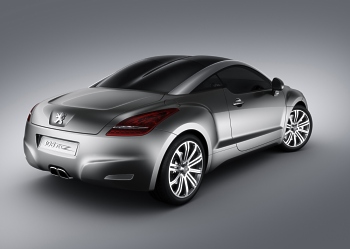
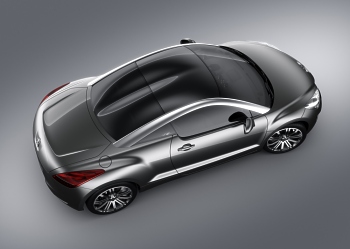
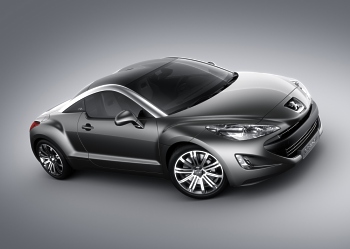
Peugeot’s interpretation of driving pleasure, the 308 RC Z The 308 RC Z concept car is a new Peugeot interpretation of driving pleasure. The car is a 2+2 coupé, with true versatility and at the same time a style that is modern, original and well-balanced.
Attention initially focused on making the vehicle as light as possible by the use of numerous aluminium components, for example the two roll over protection bars that separate the passenger compartment and give shape to the exterior styling, and the use of a polycarbonate rear windscreen and a large number of carbon fibre body parts.
|
|
|
|
Using the 308 as a blueprint offered a number of benefits. It made it possible:
|
Its taut lines and streamlined design ensure an effi cient aerodynamic specifi cation (a SCx of just 0.65), improving performance, fuel consumption and therefore helping to protect the environment due to the reduced CO2 emissions.
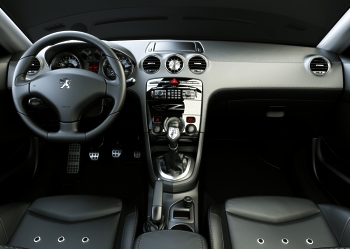
Interior With a length of 4.276 (same as the hatchback), a width of 1.840 (25 mm more than the hatchback) and a height of only 1.320 m, the proportions of the 308 RC Z concept car combines a very dynamic design with a high level of road holding.
The fascia panel in 308 RC Z concept car has been taken directly from the hatchback. A pure, elegant and fluid design, it allows a particularly clear view of the outside thanks to its sloping design which complements the vehicle’s large front windscreen.
It offers a high level of interior brightness, improved visibility and an overwhelming feeling of space. The entire fascia panel is trimmed in leather, while the use of chrome, aluminium and black lacquered fi ttings creates a sporty, upmarket impression.
With this in mind, a Bell&Ross® clock has been placed in the centre of the fascia panel, between two air vents, its typography perfectly matching the background of the instrument panel located in the driver’s line of sight.
At the rear there are two occasional seats trimmed in leather, both of which can be folded. The vehicle therefore offers real modularity and great versatility. For example, enough space can be created behind the front seats to house a set of golf clubs. Similarly, the length and maximum available boot volume can even accommodate a mountain bike!
Engine The 308 RC Z concept car is powered by a 1.6 litre THP engine developed from the EP6DTS engine designed and developed via the collaboration between PSA Peugeot Citroën and the BMW Group, where it is fi tted to the 207 RC, with a power output of 128 kW (≈175 bhp).
The 1.6 litre THP engine, as a result of new engine management software specially developed for the concept car, now produces a maximum power of 160 kW (≈218 bhp). It is characterised by incredible fl exibility, thanks to its maximum torque of 280 Nm produced at a low engine speed (300 Nm in overboost).
July 30, 2007
Photos: Peugeot
| .
Homepage News Companies Management Publications Events Guestbook Search . |