

Automotive Intelligence - the web for automotive professionals and car enthusiasts
April 02, 2008
This Week:
-
Nissan’s “Denki Cube” Electric Vehicle Concept Shown in New York
-
Gorden Wagener to become New Head of Design at Mercedes-Benz
-
Mitsubishi Motors transfers production of SUV for PSA Peugeot Citroen
-
Indian Authorities Approve Joint Venture between Daimler Trucks and the Hero Group
-
Buick Takes Next Step Toward Premium Car Design With International Appeal
-
World Premiere of Continental Sensor System in the New Volvo XC60
-
Scion Reveals Hako Coupe Concept At The 2008 New York International Auto Show
© 1998 - 2008
Copyright &
Disclaimer
Automotive Intelligence,
www.autointell.com
All Rights Reserved .
For questions please contact
editor@autointell.net
|
Electric Power Steering Improves Product Lineup
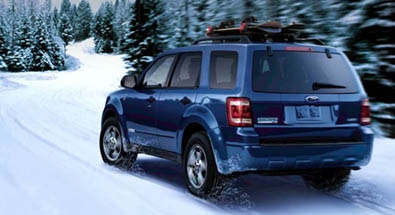
By Jennifer LaForce/DEARBORN – Ford Motor Company has made a commitment to fit 80 to 90 percent of its Ford, Lincoln and Mercury products with electric power steering (EPS) systems by 2012, improving the overall fuel economy, performance and reliability of the company's lineup. The 2008 Ford Escape, Mercury Mariner, and their respective hybrid models are already benefiting from EPS. For 2009, Ford Fusion, Mercury Milan and Lincoln MKZ will join these products, with other new and refreshed vehicles, including the Ford Mustang, Ford Expedition and Lincoln Navigator, to follow over the next three years. The EPS system in the Escape and Mariner is highly sophisticated with features such as active returnability and active damping that help correct for road irregularities and improve overall handling and steering feel. |
|
|
|
EPS also improves fuel economy, because unlike the common hydraulic-powered systems that continuously draw power from the engine, EPS draws power from an independent electric motor only as needed. According to some estimates, this on-demand capability can equal up to a one-mile per gallon improvement in fuel efficiency. For Escape, EPS and a number of other new features and technologies contribute to an 8 percent increase in fuel economy versus the previous model. |
The trend toward electric-powered steering continues to grow within the global auto industry. In Western Europe, for example, 6.1 million passenger cars and light trucks will be equipped with various EPS systems in 2007. That's up from 3.3 million vehicles in 2003, according to just-auto.com. Ford estimates that utilization of electric-powered steering in North America will increase approximately 36% by 2011. For more than 50 years, hydraulic-powered steering systems have dominated the auto industry, even though they have several major disadvantages:
These systems are powered by a hydraulic pump, a major source of parasitic engine power loss and decreased fuel economy – the pump is always operational even when steering assist is not required. These systems are a complicated mix of maintenance-intensive components that are prone to leaks, breaks, replacement and repairs -- including pumps, hoses, hydraulic fluid, drive belts and pulleys. In fact, leaks are one of the leading causes of present steering-related warranty claims. These multi-part systems require large amounts of premium under-the-hood space. These systems are a source of block-mounted engine noise due to potential vibration from the hydraulic pump. These systems pose recycling and environmental issues – where does all the old hydraulic fluid go?
In contrast, EPS systems do not require engine power to operate and draw electric power only as needed, improving efficiency and extending component life; are reasonably compact and offer some weight savings, equating to packaging flexibility and easier vehicle assembly; are quiet since there is no need for an engine-mounted pump; and eliminates the need for hydraulic fluid in the first place. In addition, EPS systems represent a CO2 emissions savings of approximately 3.5 percent since they operate on demand.
According to Hochrein, the Escape and Mariner are already showing signs that EPS can positively impact a customer's cost of ownership equation. Both vehicles have seen a significant improvement in terms of warranty repairs related to steering. "We estimated EPS would represent a two to three time reduction in warranty problems, but Escape and Mariner are performing above those estimates, at half the cost and three times better than the previous model for reported steering-related issues."
EPS continues to gain momentum in North America as the technology matures, component costs stabilize, and public acceptance grows. EPS also has the potential to add comfort, personalization and increased safety to the driving experience.
EPS, for example, can be integrated to communicate with a vehicle's brake system to help operate advanced stability control systems and accident avoidance systems such as lane departure warning.
The system also opens up doors for other creature comforts and capabilities such as auto park, which can maneuver a vehicle into a reverse or parallel parking spot for you. These systems tie multiple sensors on the rear and front bumpers to a central computer processor, which in turn calculates steering angle data, and then interfaces with the power steering system to guide the car into a parking spot.
EPS systems can also be calibrated, potentially offering customers the opportunity to personalize their drive with selectable steering efforts. Drivers that prefer a sportier ride, for example, would choose a higher steering torque than someone who prefers a more luxury-car feel.
Photo: Ford
(March 31, 2008)
| .
Homepage News Companies Management Publications Events Guestbook Search . |