|
|
 |
 |
||||||
|
February 14, 2007 This Week:
© 1998 - 2007
Copyright & |
In addition to racing versions of BMW, ALPINA has developed a progression of BMW-based cars based on 3, 5, 6, 8, Z4 and Z8 models and offered them on a limited-production basis. Up to now, the only BMW ALPINA model offered by BMW of North America has been the ROADSTER V8, a special interpretation of the Z8 Roadster of which 450 examples were delivered to U.S. customers in 2002-03.
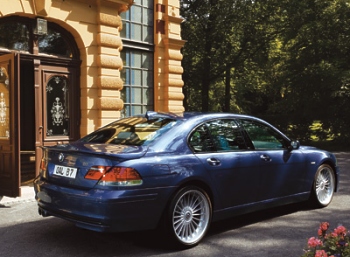
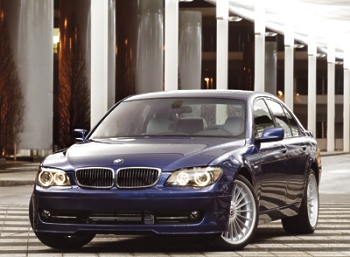
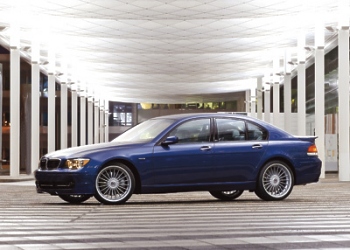
Now comes the next manifestation of the unique BMW-ALPINA synergy: the B7, based on the BMW 7 Series luxury sedan. Currently, BMW offers ultra-performance models of its 3, 5, 6 and Z4 Series developed by BMW M, BMW’s own performance subsidiary. BMW M’s automobiles have specific performance character, typified by high-revving engines and manual or sequential-manual (SMG) transmissions. For an ultra-performance version of the 7 Series – a platform that is defined by lavish luxury and generous interior space and offered only with an automatic transmission – something other than “M” performance character was called for. In recent models, ALPINA has concentrated on delivering very high levels of performance with moderate rpm ranges and automatic transmission. Most appropriately, the new BMW ALPINA B7 applies this philosophy to the 7 Series to produce a luxury sedan of stunning performance. “A 7 Series Beyond,” one might say. ALPINA is located in the small Bavarian city of Buchloe, some 50 miles southwest of Munich, BMW’s headquarters city and the capital of Bavaria. For more information on ALPINA the company, see the accompanying release. BMW itself offers a 7 Series model powered by a 438-horsepower V-12 engine, the 760Li; this is indeed a high-performance car, combining the velvety and high-torque power delivery of a 12-cylinder engine with ultimate luxury. For an unabashedly sporty interpretation of the 7 Series, ALPINA chose the path of supercharging BMW’s V-8 engine. At the time ALPINA began development of the B7 engine, BMW’s V-8 engine with Valvetronic – the unique system that regulates power output by varying intake-valve lift – was at 4.4-liter displacement, not the 4.8 liters of today’s 750i. From this basis, which delivered 325 hp @ 6100 rpm and 330 lb-ft. of torque @ 3600 rpm, ALPINA took on the challenge of supercharging a Valvetronic engine, something that had never been done before. To tell something of the ending before the story, the achievement is impressive: 500 hp @ 5500 rpm and 516 lb-ft. @ 4250 rpm. In German, such figures qualify as bullig and no translation is necessary to get the meaning. There is a clear subjective difference between an M-type exhaust note and that of the B7. Being high-revving, M engines emit a relatively high-pitched exhaust sound. The ALPINA B7 engine, with its lower-rpm range and emphasis on big torque, just as naturally – and despite the measures to keep low-frequency sound in check – puts out a lower-pitched sound. Commenting on this sound in everyday driving, the April 4, ’04 issue of Germany’s auto motor und sport magazine called it “Gently murmuring, acoustically not unlike a costly Riva boat, the V-8 pulls away and shows with great refinement that there’s also driving pleasure at less than 500 hp.”
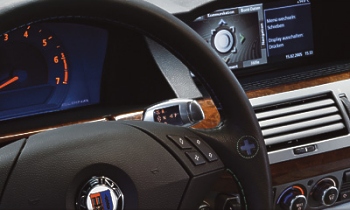
Any 7 Series BMW offers its driver and passengers lavish luxury, fine materials and tasteful design. To this sumptuous ambiance, ALPINA adds its own touches, both ergonomic and esthetic; the level of regular-production BMW standard equipment has been raised considerably as well. The steering wheel itself presents distinctive visual character and function: in its center, the ALPINA logo; on its rim Lavalina leather and special stitching, plus symbols for the SWITCH-TRONIC transmission’s upshift and downshift buttons. These “+” and “-“ inscriptions are in ALPINA Blue, and denote the actual locations of the shift buttons on the wheel’s forward side (away from the driver). BMW ALPINA B7: unique offering from a unique combination of talents The interaction of BMW and ALPINA, the wide-ranging development program that has transformed a 7 Series BMW into the ALPINA B7, the carefully composed attributes and features that Munich and Buchloe have blended into the regal “big BMW”: nothing would guarantee successful results were it not for the long and illustrious traditions of both companies and their history of synergy in developing performance vehicles of distinctive personality and capability. The success of this collaboration on the B7 is reflected in this straightforward caption from the authoritative German magazine auto motor und sport in its April 28, ’04 issue: “ALPINA B7 in action: The upper-class feeling is paired with super-sports-car dynamics.” (07.02.2007)
|
||||||