|
|
. . 
|
||||||
|
May 04, 2006
© 1998 - 2006 Copyright & |
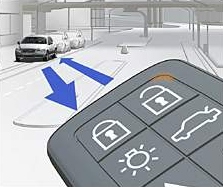
Jaguar's Smart Key System, available on the XK, allows the owner to activate the locking and starting systems by simply having a keyless fob in a pocket or purse. When the owner approaches and touches the car, antennas pick up the signal and validate the key code. Inside, more antennas validate the fob's presence and, with foot engaging the brake, allows the owner simply to press the engine "Start/Stop" button and drive off. This passive technology is becoming more popular and is available on more than 30 North American nameplates. It is available on luxury models such as the Cadillac STS and Mercedes-Benz S-Class, among others, but is now showing up in the mid-sedan segment on vehicles such as the Toyota Avalon. Lincoln Division is working on a similar system for future models. "The advantage of these keyless fob systems is you just throw it in your pocket or purse, get in the car, push start and drive away in the usual manner," said John Van Wiemeersch, supervisor, Electrical Security, Ford North America. "It's truly a nice hands-free experience." Key fob technology emerged in the 1980s as a nifty device to remotely lock/unlock doors, roll down windows or arm car alarms. But vehicle security became a strong driver in the 1990s, when thefts were costing Americans billions of dollars a year. This is when anti-theft ignition immobilizers were developed. Ignition immobilizers consist of an electronic chip in the key that communicates with computers on the vehicle. When the driver inserts the key in the ignition, its chip performs an encrypted communication with the car's computer asking it if an algorithmic code -- a number with 18 million billion combinations -- is correct. If the code is correct, the computer starts the car. The code is reset with a different series of numbers each time the key is used. Ford was an early leader in electronic ignition immobilizers. Its SecuriLock system on the 1996 Mustang GT was among the first to use sophisticated transponder technology instead of mechanical techniques. After SecuriLock's introduction, theft rates for the GT fell dramatically. "We were among the first to push a chip-based system which was innovative at that time," said Van Wiemeersch. "We are innovative in terms of our ability to get this technology across our fleet, to be there in volume. And we have one of the most secure systems." Ford has further refined and innovated its technology, as owners of the 2006 Ford Fusion, Mercury Milan or Lincoln Zephyr will notice -- there is no more fob to fumble with. "You used to have a computer chip in the key and a chip in the fob -- now it's all integrated into the ignition key," said Van Wiemeersch. "The benefit to the customer is that it's a more compact device." And the evolution of the key continues -- Volvo has also developed an innovative key fob called the Personal Car Communicator. "Personal security is one of the cornerstones of the Volvo safety profile," said Silvia Güllsdorf. "It is about having your car left undisturbed and avoiding situations that could entail personal risk." Working in conjunction with the new 2007 Volvo S80, the Personal Car Communicator fob provides information such as whether the car is locked or unlocked and whether the alarm is activated or not. But it's most innovative feature, however, is the world's first ever heartbeat sensor. Using a highly sensitive heartbeat sensor in the car, and an advanced calculation process, it can tell the owner, via the fob, whether there is someone in the car or not. As with all new technology, these new advanced keys take some getting used to. For one, today's keys, with all their electronics, can be expensive to replace if lost. Keys and key fobs can cost from $50 to $300 to replace, which includes the hardware and the cost of reprogramming them. There's also a learning curve to acclimate to these advanced keys -- especially keyless systems. For example, users of keyless systems have to remember to turn off the engine after exiting the car, and remember to give the fob to valet parking attendants. So where is the future of the "key" heading? "The next evolution will probably be biometrics -- recognizing your fingerprint or an iris or your face or speech," said Van Wiemeersch. "But biometrics entails an order of difficulty that is much higher, because it's hard to recognize biosystems accurately and quickly." (By Michael J. Ureel, FCN)
|
|||||