

.
.March
03, 2004
.
This Week:
-
Jeep® Brand Expands its Appeal in Europe with Four New Special Series Vehicles
-
Former GM Kenya Ltd. Name Change to General Motors East Africa Ltd.
-
MG SPORT & RACING Offer Even More Performance With "R" Version Of MG XPOWER SV At Geneva
-
The All-New 2005 Chrysler 300: The Heart and Soul of a Performance Car
© 1998
- 2004 Copyright &
Disclaimer
Automotive Intelligence,
www.autointell.com
All Rights Reserved .
For questions please contact
editor@autointell.com
.
The All-New 2005 Chrysler 300: The Heart and Soul of a Performance Car
-
Diverse Powertrain Offering Creates Distinctly Different Models
-
First Use of Chrysler Group Five-Speed Automatic for Best Combination of Torque Capacity, Performance, Fuel Economy and Smoothness
-
Industry First: Multi-Displacement System Saves Fuel While Retaining HEMI(R) Power
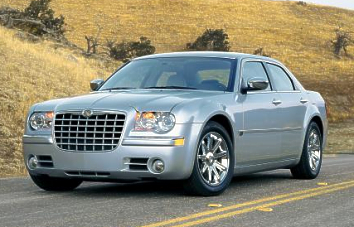
2005 Chrysler 300
AUBURN HILLS, Mich. - A car designed from the ground up with performance and luxury in mind demanded powertrain systems that exceeded customers' expectations. Three engines and two transmissions were developed to provide the optimum powertrain choice for Chrysler 300. The 2.7-liter DOHC V-6 provides the 300 with an outstanding combination of performance, fuel economy, quietness and durability. The 300 Touring and 300 Limited models utilize the 3.5-liter SOHC V-6 engine with high-output performance, fitting of a touring car. For the ultimate in performance, the Chrysler 300C comes standard with the 5.7-liter HEMI(R) V-8.
Transmissions were matched to the engines to provide the best combination of performance, smoothness and fuel economy. Two transmissions will be available in the Chrysler 300. A proven DaimlerChrysler five-speed automatic will be offered for the first time ever in a Chrysler Group passenger car, standard on Chrysler 300 vehicles equipped with all-wheel drive or a 5.7-liter HEMI V-8. The five-speed automatic transmissions will be controlled by Chrysler Group's AutoStick(R) driver-selectable range control. This shifter accommodates fully-automatic shifting, or the driver can manually select a gear range. Rear-wheel drive 3.5-liter and 2.7-liter vehicles will be equipped with a revised version of a proven Chrysler Group four-speed automatic transmission.
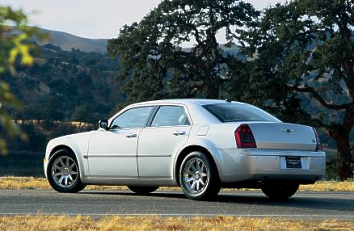
Photos: DC
5.7-liter HEMI V-8
The introduction of the modern HEMI in Chrysler passenger cars marks several milestones. This engine offers more power and torque than any Chrysler passenger car engine since the legendary 426 HEMI of the '60s and '70s. Today's new engine produces 340 hp @ 5000 rpm and 390 lb.-ft. of torque at 4000 rpm.
The new HEMI has been engineered to deliver outstanding performance, while providing minimal noise, vibration, and harshness qualities, smoothness and low emissions. Fuel economy has also been improved, but not at the expense of performance. Chrysler Group has developed, and will be the first to offer, Multi-Displacement System (MDS) on a modern, large volume vehicle in North America.
Owners of the Chrysler 300C will receive the powerful benefit of the HEMI engine with the fuel economy that they would only expect from a smaller, less powerful engine.
Some of the significant technologies enabling the Chrysler Group MDS are the speed of electronic controls, the sophistication of the algorithms controlling the systems and the use of Electronic Throttle Control (ETC). The HEMI will be able to transition from eight cylinders to four in 40 milliseconds (0.040 seconds).
The HEMI engine with MDS has completed more than 6.5 million customer- equivalent miles through Chrysler Group's development and durability testing. It is covered by the 7-Year/70,000-mile limited powertrain warranty.
The HEMI engine that powers the Chrysler 300C uses aluminum cylinder heads with hemispherical combustion chambers for outstanding airflow leading to high power and torque. Dual ignition (two spark plugs per cylinder) increases peak power and torque, reduces exhaust emissions, increases fuel economy and provides a smooth idle. The combustion system has been refined and the engine uses direct-mount accessories for quiet operation.
ETC enables several of the technologies used to maximize vehicle smoothness, performance, safety and fuel economy.
3.5-liter SOHC V-6 ENGINE
The 3.5-liter V-6 engine used to power the Chrysler 300 Touring and 300 Limited is derived from versions of this engine used in prior Chrysler Group vehicles. An all-new active three-plenum intake manifold provides high power and torque over the entire operating band, with 250 hp at 6400 rpm and 250 lb.-ft. of torque at 3800 rpm. This engine provides the perfect blend of performance and economy.
A new active three-plenum intake manifold with electronically controlled manifold tuning valve and short-runner valves provides more power to the 3.5- liter. Additionally, ETC is used on this engine in the Chrysler 300 Touring and 300 Limited.
2.7-liter DOHC V-6 ENGINE
The 2.7-liter V-6 has proven durable in a variety of Chrysler Group applications, and has been revised to power the Chrysler 300. The engine has been improved to produce more low-speed torque at launch and during mid-range operation for strong performance in everyday driving. The engine produces 190 hp at 6400 rpm, and 190 lb.-ft. of torque at 4000 rpm, and it offers good fuel economy for a vehicle of its size.
Revisions on the 2.7-liter V-6 include an all-new active dual-plenum intake manifold that is tuned for improved low-speed torque. In addition, the manifold includes a manifold tuning valve that further adds to low-speed torque during both part-throttle and wide-open throttle operation. This valve increases part-throttle torque by eight-10 percent in the primary driving range of 2100 to 3400 rpm, giving better performance in normal driving.
Another addition to the 2.7-liter for 2005 is the use of ETC. This maintains more consistent vehicle speed on rolling grades when cruise control is active, and interacts with the transmission control system to further minimize gear hunting under these conditions. It also tailors throttle response to pedal movement based on operating conditions. For example, a large pedal motion at a standing start may open the throttle less than the same pedal movement at highway speeds.
FIVE-SPEED AUTOMATIC TRANSMISSION
The Chrysler Group's first five-speed automatic transmission for passenger cars provides a full range of transmission performance to match a great variety of driving styles, situations and road conditions.
The transmission's physical attributes include compact size, robust design for high-torque rating and multiple features providing high efficiency. It also utilizes highly advanced electronic controls such as fully adaptive electronic control and an Electronically Modulated Converter Clutch (EMCC).
This five-speed automatic transmission is standard equipment with the 5.7- liter HEMI V-8 engine on the 2005 Chrysler 300C and with all-wheel drive applications. It is a DaimlerChrysler transmission built at the Indiana Transmission Plant II in Kokomo, IN.
The ratio spread from first to the fifth gear was selected to minimize fuel consumption and reduce powertrain noise during cruising. An aggressive first-gear ratio provides excellent launch performance, and evenly spaced gear ratios provide smooth acceleration through the gears. World-class efficiency is achieved through physical and electronic means. This transmission uses bearings to reduce friction. In many locations where other transmissions may utilize bushings.
The transmission also uses a unique scavenging system that removes oil, spun off from rotating parts by centrifugal force, through strategically placed slots in the outside of the case. This saves energy that would be consumed by internal parts rotating in oil. Also, lubricating holes in the clutches are positioned to promote quick passage of the transmission fluid through the discs, minimizing viscous losses due to trapped oil.
Fully adaptive electronic control makes shifts very smooth. The system monitors the transmission as shifts occur and adjusts hydraulic pressure as needed. In so doing, the controls make the powertrain feel responsive without harshness. Driver recognition software alters shift points based on accelerator pedal usage, brake usage and lateral acceleration. This feature allows both sporty and economical operation.
The torque management system uses engine-torque modeling to facilitate smooth transmission shifting. Because of ETC, torque management is more sophisticated and covers a broad torque range.
The shift schedule adapts to individual driving style, driving situation and road conditions. Shift points based on accelerator pedal usage, brake usage, lateral acceleration, altitude and load on the car as a result of grades. The electronically controlled engine torque management system provides quick wide-open-throttle up shifts and quick two-step (4-2 or 3-1) kick-down shifts that are smoother than would be otherwise possible without this feature.
FOUR-SPEED AUTOMATIC TRANSMISSION
The 42RLE four-speed automatic transmission is a variant of the 42LE automatic transmission used on previous Chrysler Group vehicles. It was developed for the Chrysler 300 and is included with both V-6 engines on rear- wheel drive models.
This four-speed automatic features fully adaptive electronic control of all shifting for smooth operation. Similar to the five-speed, it uses the torque management system to smoothly execute quick wide-open-throttle up shifts and down shifts. It also uses an EMCC to electronically modulate torque converter lockup and provide for partial engagement in third or fourth gears. This results in improved shift feel, fuel economy, driveability and cooling.
(Mar 1, 2004)
| .
Homepage News Companies Management Publications Events Careers Services Discussion Guestbook Search . |